I grew up praying mostly just before board exams. I remember promising God all kinds of things in exchange for good marks or for the girl I liked back in 5th standard. (She's married to someone else recently, by the way.) I also have a vivid memory of throwing religious items into a river. It's something I still feel ashamed of.
But slowly over the years I've spent a fair amount of time questioning everything, and reading about morality, capitalism, and evolution.
This isn't an attempt to convince you of what I believe. I don't think that's the point. Honestly, I'm not sure I've landed anywhere myself I'd rather leave you with an open question than a verdict.
1. The Theistic
The theist starts with a sharp observation:
If humans make morality, then couldn't humans also change it? Whatever we made, we can remake. So without something above us, what makes a moral claim objectively true rather than just a personal or cultural preference?
Dostoevsky captured this in The Brothers Karamazov (1880):
If God does not exist, everything is permitted.
The point isn't that people would suddenly turn wicked the moment they stopped believing. The deeper worry is about authority what gives morality its ultimate grounding, the thing that lets us say a moral claim is really binding and not just a strong opinion.
Consider:
- Slavery was once widely accepted.
- Genocide has been justified by governments as necessary or even righteous.
- Different cultures still disagree on plenty of moral questions.
Without something above humans, how do we say one culture is actually wrong rather than merely different?
2. The Secular
Moral truths might be real the same way mathematical truths are real without needing anyone, human or divine, to hold them up. Nobody thinks 2+2=4 needs God to enforce it, or that the law of non-contradiction would collapse if the universe suddenly went atheist.
This is the old Euthyphro dilemma, from Plato:
Does God command something because it is good, or is it good because God commands it?
If God commands it because it's already good, then goodness exists independently of God, and God is a reliable messenger rather than the source. If it's good only because God commands it, then morality is arbitrary God could have commanded cruelty, and cruelty would be 'good.'
So if we ask 'Why is this good?', answering 'Because God said so' doesn't fully resolve the problem. The grounding problem doesn't disappear when you add God.
Empirically, secular people aren't more criminal, and highly secular societies (Scandinavia, Japan) have low violence and high social trust. People refrain from murder because they empathize and value others, not mainly because they fear hell.
3. Suffering and Flourishing
While reading the secular view, you might naturally think: "Isn't morality simply about not harming others?" That's exactly the idea behind the ethical theory below.
One of the most influential secular approaches is consequentialism, particularly utilitarianism, developed by Jeremy Bentham and later refined by John Stuart Mill. The idea is simple:
An action is morally right if it reduces suffering and increases well-being.
Notice that this doesn't require God. But this view isn't without problems.
Would you kill baby Hitler knowing this infant will one day cause the deaths of six million Jews?
Some people say yes immediately: one death to save millions, the math is obvious. But many refuse, because the baby is, right now, innocent. And that refusal is the interesting part. It suggests a lot of us hold intuitions that some acts are simply wrong regardless of the consequences that morality can't be reduced to an arithmetic problem. Which is a direct challenge to the suffering-and-flourishing line.
4. Justify Violence
Religion has played a role in several devastating conflicts:
- The Partition of India roughly 200,000–2 million deaths.
- The Thirty Years' War around 3–8 million deaths.
- The 2002 Gujarat riots around 1,000–2,000 deaths.

In each case, though, historians emphasize that religion alone was not the sole cause; political power, nationalism, and ethnic identity were deeply intertwined.
And the 20th century's explicitly atheist regimes Stalin's USSR, Mao's China, Pol Pot's Cambodia killed tens of millions, arguably more than every religious war in history combined. And they did it with no God.
5. The Accident of Birth
Almost nobody arrives at their religion by surveying every option and reasoning their way to the truest one. If you're born in:
- India → you're far more likely to be Hindu.
- Saudi Arabia → far more likely Muslim.
- Italy, historically → far more likely Catholic.
This suggests that religious belief is heavily influenced by culture rather than independent investigation. And if morality is tied to religion, then morality itself is also heavily influenced by culture. so If I were born somewhere else, would I have a different moral compass?"
6. The Authority Problem
Critics such as Bertrand Russell argued that religion can discourage skepticism and independent inquiry. His point wasn't that religious people are incapable of critical thinking, but that when an answer is treated as unquestionable because it comes from divine authority, the discussion can end before evidence or reason has a chance to weigh in.
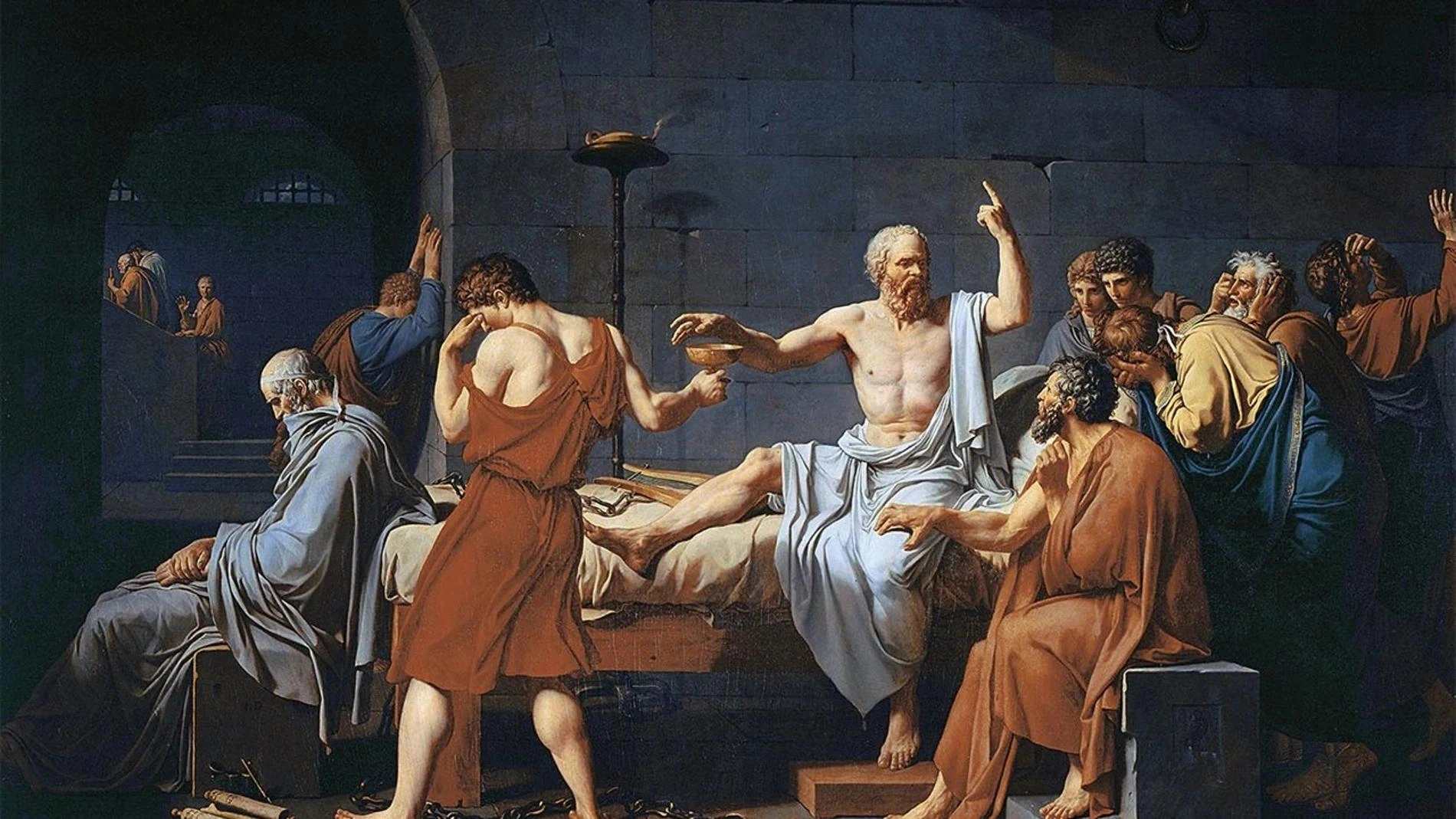
Although some of history's most relentless questioners were themselves deeply religious.
So, Where Does That Leave Me?
I honestly don't know. I can poke holes in the theistic view and holes in the secular one in the same night. If I see an ambulance pass by, even though I reject the idea of God, I still find myself praying for whoever is inside.
I don't have the answer. I just have the question. So I'll leave it with you the same way it sits with me.
Would morality exist without God?
Thanks for reading.